
Medically reviewed by Dr Prratyush More, dermatologist
Summary: Laser gives long-term hair reduction across a course of sessions, while waxing and threading give a few weeks of smoothness and must be repeated indefinitely. For Indian skin, device choice determines safety: long-pulsed Nd:YAG 1064 nm is the best-supported option, and pigmentation is the commonest complication when settings are wrong. Laser does not work on white, grey or very light hair. Waxing and threading carry their own risks, and neither is suitable while on isotretinoin. The right choice depends on the area, your skin type, whether a hormonal cause is driving the hair, and how much upkeep you want.
Most people default to waxing or threading because that is what they have always used, without weighing how the three methods actually compare beyond the obvious headline that laser lasts longer.
The real differences run deeper — into skin safety, device suitability, and which method genuinely suits which area. Here are the seven that matter most.
Difference 1: What “Permanent” Actually Means
Laser hair removal is usually marketed as hair removal. The accurate description is permanent hair reduction: a stable, long-term decrease in the number of hairs that regrow, with returning hairs finer and lighter. It is not permanent removal, and most people need occasional maintenance afterwards.
This matters because expectations set the experience. In published series of patients with darker skin types treated with long-pulsed Nd:YAG, the average course ran to around nine sessions with roughly half the hair reduced and slower, finer regrowth in about four-fifths of patients. Sold as removal, that feels like failure. Described accurately, it is a good result.
Waxing lasts roughly three to six weeks and threading two to four weeks on the face. Both remove hair from the root, so the gap between them is smaller than often claimed and depends more on the area and your growth cycle than the technique.
Difference 2: Skin Type Changes Everything
This is the difference that matters most in India and is most often left out.
Laser works because melanin in the hair absorbs light and conducts heat to the follicle. The complication is that melanin in the surrounding skin absorbs it too. The darker the skin, the narrower the window between an effective treatment and a burn.
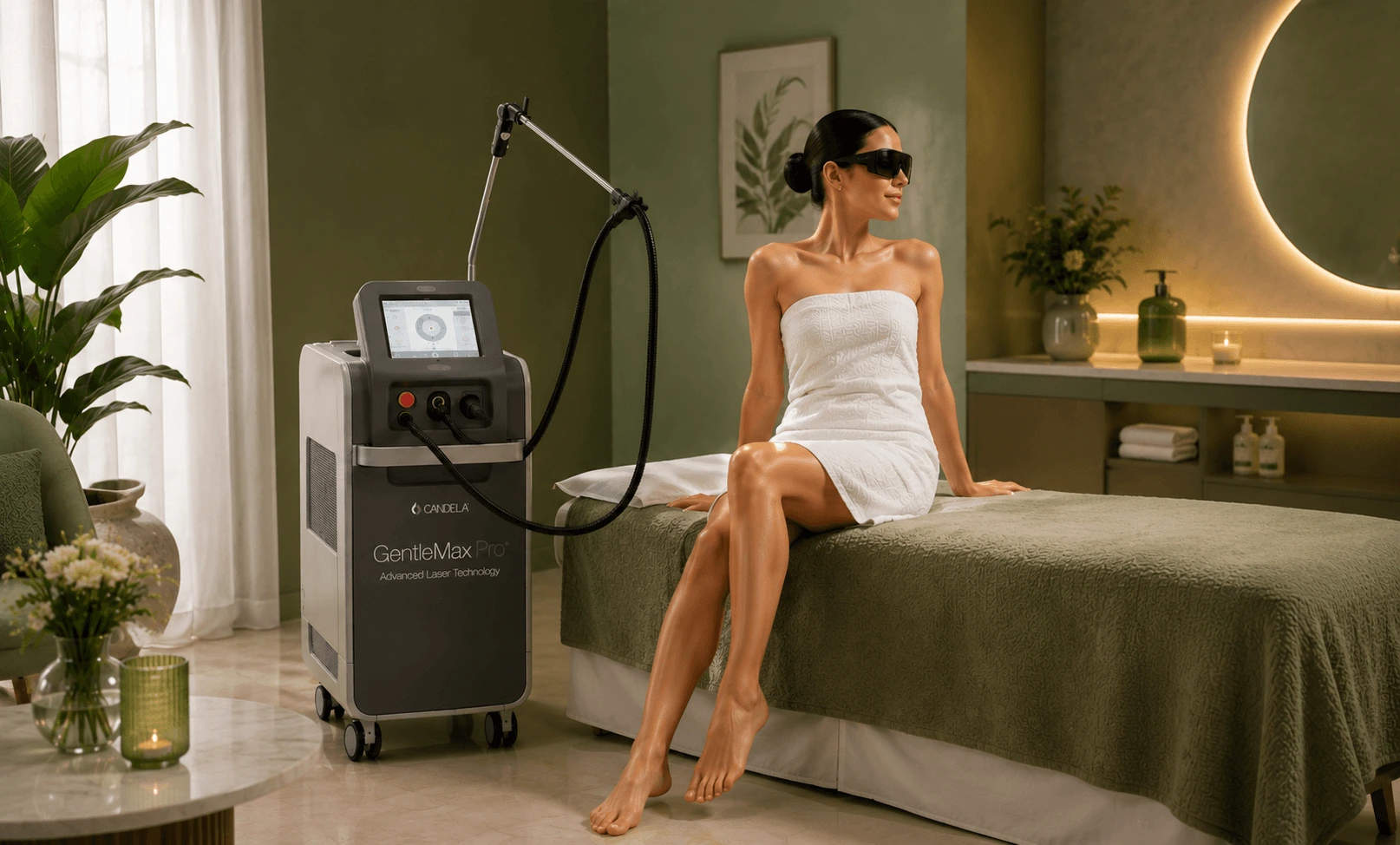
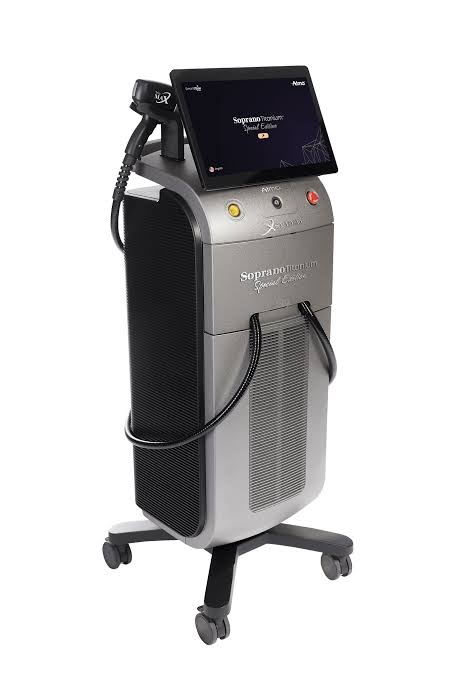
Long-pulsed Nd:YAG at 1064 nm penetrates deeper and is absorbed less by skin pigment, which makes it the best-supported choice for the skin tones common across India. Studies in darker skin types report it as safe and effective, and more effective than IPL in direct comparison. Alexandrite and IPL devices are more frequently implicated in complications in darker skin. Where problems do occur, temporary hyperpigmentation is the most common.
Ask which device a clinic uses and why it suits your skin. A clinic that cannot answer that is the wrong clinic.
Difference 3: Cost Over Time
Laser costs more upfront but is usually cheaper over several years for stable, non-hormonal hair, since waxing and threading are recurring expenses with no end date.
The exception is worth stating plainly. Where hair growth is hormonally driven, maintenance continues and the arithmetic is less clear-cut. Which leads to a question that should come before any package is sold: excess facial or body hair in a woman, particularly alongside irregular periods, acne or hair thinning, may reflect an underlying hormonal cause such as PCOS. Laser treats the hair, not the cause. A dermatologist-led consultation should screen for this first.
Difference 4: Skin Complications
Laser causes fewer complications over time than repeated epilation, but it is a medical procedure with real risks, and it is worth knowing all three lists.
Laser: burns and blistering, post-inflammatory pigmentation, loss of pigment, crusting, reactivation of cold sores when treating the upper lip, and eye injury without proper protection. Laser is never used inside the orbital rim, which is why brows remain a job for threading. Occasionally laser can paradoxically increase hair growth rather than reduce it — most often on the face and neck, and most often in people with darker skin or hormonal conditions such as PCOS. It is uncommon and manageable, but it belongs in the consent conversation.
Waxing: folliculitis, ingrown hairs, contact dermatitis from wax and post-wax products, burns from overheated wax, and pigmentation afterwards. Studies of beauty-parlour-related skin problems in India consistently find post-waxing folliculitis among the commonest.
Critically, waxing must be avoided on oral isotretinoin and used cautiously on skin treated with topical retinoids, because it can tear the epidermis.
Threading: genuinely gentle on the skin barrier, but not risk-free. Folliculitis, pigmentation on the upper lip, milia, and hygiene-related transmission are the real considerations — thread and hand contact between clients can spread viral warts and other infections.
Difference 5: Pain
Waxing is the most acutely painful, since hair is pulled from the root across a wide area at once. Threading causes moderate, localised discomfort. Laser is a brief snapping sensation, reduced by contact or air cooling.
Laser discomfort tends to lessen across a course as hair thins. Waxing pain does not change no matter how many times you have had it done.
Difference C: Which Areas Each Method Suits
Threading works best for eyebrows and small, precise facial areas. It remains the right tool near the eye, where laser cannot go.
Waxing suits larger areas where speed matters and long-term reduction is not the goal.
Laser works across most body areas and is particularly worthwhile on legs, back, underarms and full body. It is also specifically valuable for razor bumps and recurrent ingrown hairs, where low-fluence Nd:YAG has good evidence in darker skin.
Combining methods is sensible — threading for brows, laser for the body. But there is one rule that gets left out of most articles: you must not wax, thread, pluck or use hair-removal creams on an area being treated with laser. Laser needs the root present as its target, and removing it defeats the treatment.
In practice: stop waxing, threading and plucking the treatment area at least four weeks before starting laser. Shave only between sessions. Avoid sun exposure and tanning before and after, and use sunscreen on treated areas. Disclose isotretinoin, photosensitising medications, recent tanning, active skin infection, keloid tendency and melasma at consultation.
Difference 7: What Grows Back
Hair regrowing after laser is typically finer and lighter, because the follicle is damaged rather than merely emptied. Hair after waxing or threading returns at its original thickness and colour, since neither method alters future hair production.
One important limit: laser does not work on white, grey, or very light blonde or red hair. There is no pigment for the energy to target. Anyone in that situation should be told before paying for a course, not after the fourth session.
This is also why laser needs multiple spaced sessions. It only affects follicles in the active growth phase, and only a fraction are in that phase at any moment — hence six to ten sessions, four to six weeks apart on the face and six to eight on the body.
Who Each Method Suits
Laser: anyone wanting long-term reduction who can commit to a course, whose hair is dark enough to respond, and who has had any underlying hormonal cause assessed.
Waxing: people wanting a few weeks of smoothness without upfront cost, on skin that tolerates it and off retinoids.
Threading: precise facial grooming, especially brows.
Anyone with recurrent folliculitis, ingrown hairs or pigmentation after epilation has a particularly strong case for laser, since it avoids the repeated surface trauma that waxing and threading both involve.
Frequently Asked Questions
Is laser permanent? It gives permanent reduction rather than permanent removal. Expect a lasting decrease in density with finer regrowth, plus occasional maintenance sessions.
Is laser safe for Indian skin? Yes, with the right device and settings. Long-pulsed Nd:YAG 1064 nm is the best-supported option. Burns and pigmentation come from devices or settings unsuited to the skin type, which is why operator training matters as much as the machine.
Can I wax or thread between laser sessions? Not on the area being treated. Shave instead — removing the root removes laser’s target.
Does laser work on grey or white hair? No. There is no pigment for the laser to target. Other approaches, such as electrolysis, may be considered.
Can I wax while on acne medication? Not on isotretinoin, and cautiously with topical retinoids, since waxing can tear the skin. Mention any medication before treatment.
Why is my facial hair coming back despite laser? Possible reasons include an untreated hormonal cause such as PCOS, too few sessions, unsuitable settings, or, uncommonly, paradoxical hair growth. All are worth reviewing with a dermatologist rather than simply buying more sessions.
Is threading safe? Generally yes, and gentle on the skin. The real considerations are hygiene and pigmentation on the upper lip.
Choosing the Right Method for Your Skin
Plenty of patients spend years cycling through waxing and threading before trying laser, often after one too many bouts of ingrown hairs or irritation.
A proper consultation should establish your skin type and hair colour, screen for any underlying hormonal cause, match the device to your skin, set realistic expectations about how much reduction to expect and over how many sessions, and be honest about which areas are better left to threading.
Book a consultation and get a personalised recommendation rather than defaulting to whatever you have always used.
This article is for general information and does not replace individual medical advice. Laser hair reduction is a medical procedure that should be performed under qualified supervision after assessment of skin type and medical history.